
Many people with conditions like autism or intellectual disability receive specialized medical care as children. But once they turn 18, that care often disappears. Adult medical systems are usually not designed to handle the complex needs of people with neurodevelopmental disorders. These adults may have trouble with communication, behavior, seizures, mental health, daily living skills, and access to social services. As a result, many do not get the care they need.
This paper describes a new care program called the Clinical Center for Adults with Neurodevelopmental Disorders (CCAND), created at the University of Maryland. CCAND was designed to close the gap between pediatric and adult care and facilitate care transition. The center uses a team-based approach and is supported by funding from the state of Maryland.
From 2019 to 2024, CCAND cared for 305 adults, ages 18 to 67, including 93 individuals with tuberous sclerosis complex (TSC). Most patients had developmental conditions such as autism, intellectual disability, epilepsy, or rare genetic disorders. Over 90% returned for follow‑up care, showing strong patient and family engagement. During the COVID‑19 pandemic, CCAND successfully provided care through telemedicine.
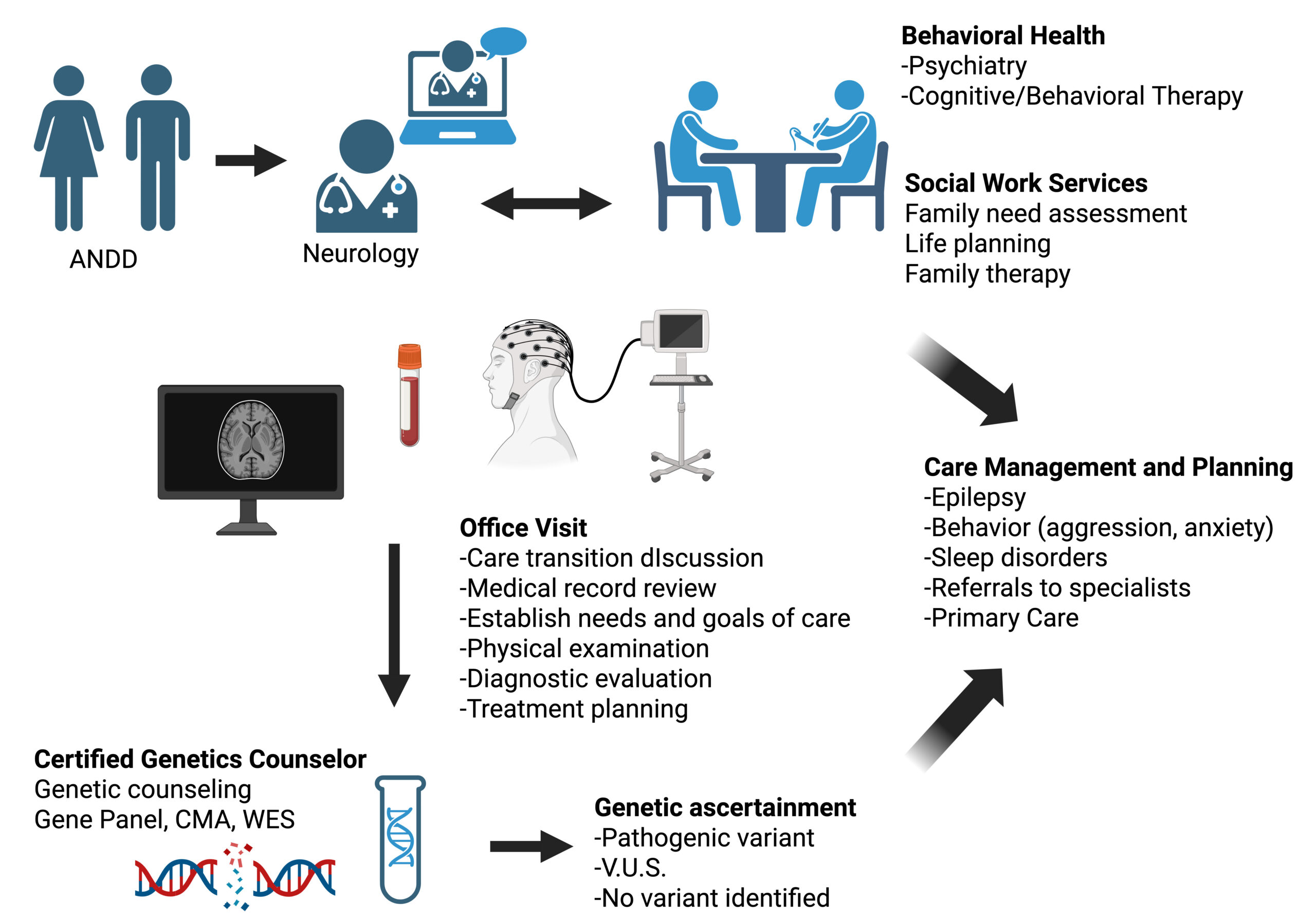
What makes CCAND different is its multidisciplinary team. Patients are seen by a neurologist and psychiatrist, supported by nurse practitioners, a social worker, a genetic counselor, and administrative staff. In a single program, CCAND addresses medical needs (like seizures), mental health and behavior, genetic testing, social services, and long‑term care planning. This reduces the burden on families, who would otherwise need to schedule many separate appointments at different locations.
Epilepsy was common in this group, and some had never been correctly diagnosed before coming to CCAND. In several cases, treatment began only after CCAND identified seizures for the first time. The program also focused heavily on behavior problems, anxiety, sleep issues, and self‑injury—concerns that greatly affect quality of life.
Genetic testing was another key part of care. Many adults had never received modern genetic testing as children. Among those genetically tested at CCAND, nearly 20% received a new genetic diagnosis, providing families with important answers about the cause of the condition and future health risks. These results also helped patients connect with support groups and research opportunities.
Social workers played a major role by helping families navigate insurance, state disability services, housing, transportation, vocational programs, and future planning—especially important as parents age or become unable to provide care.
A major finding of the paper is that normal medical billing does not cover the true cost of this kind of care. Specialized staff such as social workers and genetic counselors are essential but are not fully reimbursed by insurance. CCAND survives because Maryland provides about $500,000 per year in state funding—a very small portion of the state budget, but enough to make the program work.
The authors conclude that CCAND offers a practical blueprint for other states. With modest public funding, similar centers could greatly improve access, health outcomes, and quality of life for adults with neurodevelopmental disorders across the United States.
Lead author: Peter Crino, MD, PhD, Dr. Richard and Kathryn Taylor Endowed Professor and Chair of Neurology, University of Maryland School of Medicine, Baltimore, Maryland
Help the TSC Alliance accelerate TSC research by donating to the 50 Forward Fund!