
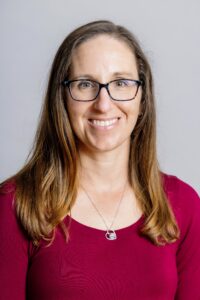
For Dr. Jamie Capal, a career caring for children with complex neurodevelopmental conditions began long before medical school.
As a college student, she worked as a one-on-one aide for a young man with Down syndrome and autism at a residential children’s home in upstate New York. Supporting children with significant medical and developmental needs gave her a firsthand appreciation for the challenges families face—and inspired her to dedicate her career to helping them.
“I just found it to be really rewarding,” Dr. Capal says. “I really wanted to take care of this population.”
That experience led her to pursue training in neurodevelopmental disabilities, a relatively new program at the time. After completing her residency at Cincinnati Children’s Hospital Medical Center, she joined the faculty with a passion for caring for children with developmental disabilities.
Her introduction to tuberous sclerosis complex (TSC) came soon afterward when a colleague encouraged her to consider joining Cincinnati Children’s TSC Clinic.
“He said, ‘A lot of these individuals have autism, behavior challenges and intellectual disability,'” Dr. Capal recalls. “It really opened my eyes.”
Since 2014, TSC has become the defining focus of her career as a neurodevelopmental neurologist.
“I’m so happy that he approached me,” she says. “It’s completely changed my life and defined my career.”
Dr. Capal is part of one of the world’s largest TSC Centers of Excellence, where more than 600 individuals receive multidisciplinary care from specialists in neurology, nephrology, pulmonology, psychiatry and other fields. Her clinical and research interests center on TSC-Associated Neuropsychiatric Disorders (TAND), helping families understand and manage the behavioral, emotional and developmental challenges that often accompany the condition.
“There is so much to understand and so much to offer families,” she says.
While scientific progress continues, Dr. Capal believes one of the greatest needs facing the TSC community is ensuring families have access to knowledgeable providers and practical support.
“I can handle the seizures. I can handle the tumors. But the behavior—I just don’t know what to do.” She hears that message from parents every day.
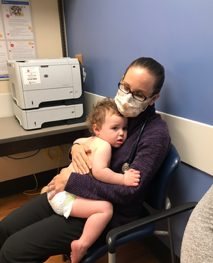 Dr. Capal is developing practical, family-centered interventions that can be delivered virtually, giving families tools they can use immediately while expanding access beyond major academic medical centers. She also sees an urgent need to improve services for adults with TSC, whose support systems often disappear after high school or pediatric care ends.
“We had more than 100 people attend a recent transition webinar,” she says. “Families were so desperate for information about what happens when their child becomes an adult.”
Throughout her career, Dr. Capal has been one of the TSC Alliance’s most active clinical leaders. She has spoken at regional conferences, reviewed research grants, participated in the Natural History Database and Biosample Repository, served on the TSC Research Consortium, and contributed to the Reproductive and Perinatal Health Task Force. Currently, she participates as a non-voting member of the organization’s Board of Directors.
“The TSC Alliance has been supportive of my career since the very beginning,” she says. “They’ve always given me opportunities to learn, opportunities to network and opportunities to grow.”
More than anything, she values the TSC Alliance’s sense of community.
“I feel like they’re my very dear friends,” Dr. Capal says. “They’re never just standing on the sidelines telling you to figure it out. They’re in the battle with you. They truly care about the families, and they care about the work. That’s what makes the TSC Alliance so special.”
For her, every family deserves access to expert care, compassionate guidance and hope for the future. Through her work, and her partnership with the TSC Alliance, she is helping make that vision a reality.
Help the TSC Alliance accelerate TSC research by donating to the 50 Forward Fund!