
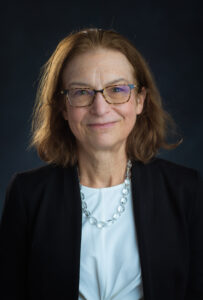
Elizabeth P. Henske, MD
The Henske laboratory at Brigham and Women’s Hospital is best known for the discovery that mutations in the TSC2 gene are the cause of lymphangioleiomyomatosis (LAM). Identifying the genetic cause of LAM was a landmark breakthrough, providing critical groundwork for later tuberous sclerosis complex (TSC) and LAM research including the clinical trials of Rapamycin in LAM.
More recently, her team has pioneered work related to the effects of the immune system on tumor growth in TSC. They are focused specifically on macrophages, a type of immune cell that is abundant in TSC-related tumors. Macrophages are supposed to eliminate tumor cells, bacteria, and other foreign material, but in TSC and LAM, they are somehow deactivated. “We discovered in 2019 that the immune system is involved in TSC kidney tumors and in LAM, leading to important work by many groups on different types of immune cell dysfunction in TSC,” Henske says. “This now includes Macrophages, which have been altered into a state that doesn’t destroy tumor cells.”
Using a drug that was developed at the National Institutes of Health, Dr. Henske has been able to reactivate the macrophages. “It’s possible that some combination of reactivating the macrophages and the T-cells could be a new therapy for TSC,” she says. “Not immediately, but down the road, a way to eliminate the tumor cells in TSC – not just suppress them the way we do now, with rapamycin.”
In addition, the Henske lab identified a major molecular target, TFEB, for future therapies, potentially transforming treatment for TSC kidney tumors. “TFEB seems responsible for much of the cell growth in TSC-related kidney tumors in mice,” she says. “When we disrupt TFEB in mice, the kidneys and the mice return to normal. We think this factor is an essential mediator of tumor development.”
Clues to future treatments may be found in the tumor microenvironment. “We’ve looked a lot at the tumor cells, but less at how they influence the cells around them,” Dr. Henske says. “Tumors are continuously talking to surrounding cells — immune cells, fibroblasts, blood vessels — to help them grow. If we can interrupt these pathways, we could slow tumor progression.”
Dr. Henske commends the TSC Alliance’s unique translational research infrastructure for effectively moving lab discoveries to clinical trials. “The beauty of this assembly of resources through the TSC Alliance is that when someone has a great idea, it can move forward with great efficiency. The Preclinical Consortium and Natural History Database allow standardized, faster testing before moving to humans.” That’s why research funding is so critical. “We can’t afford to lose the people doing this work. We need support to move breakthroughs from the lab to clinical progress. We’re at a moment of real momentum.”
Help the TSC Alliance accelerate TSC research by donating to the 50 Forward Fund!